
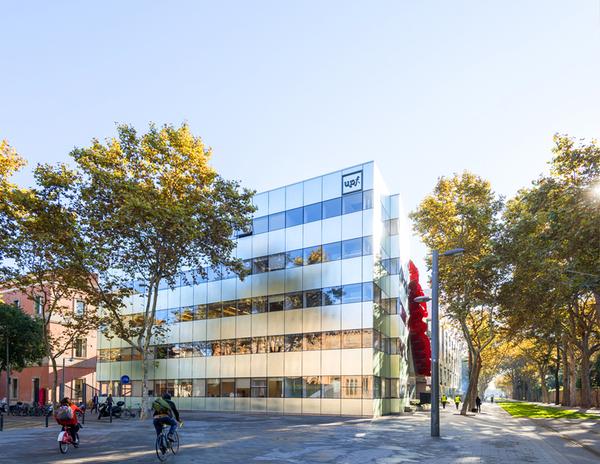
Introduction: Why Barcelona GSE Matters (More Than You Think)
Let’s be honest, finding a fully funded master’s program that actually pays you to study is rare. Like, finding-a-unicorn rare.
But the Barcelona Graduate School of Economics (GSE) Scholarship 2026 isn’t a myth. It’s real, it’s generous, and it’s open to students from literally anywhere in the world.
Here’s what makes this different from those “scholarship opportunities” that ask for application fees or only cover tuition: Barcelona GSE covers everything. Your tuition? Paid. Your rent in one of Europe’s most vibrant cities? Covered. Your food, transport, books? All accounted for through the living stipend.
ALSO CHECK OUT:DAAD Masters Scholarships 2026: Complete Guide to Fully Funded Study in Germany
I’ve spent years advising international students on scholarship applications, and I’ll tell you straight—this is one of the opportunities that actually moves the needle. And with a July 2, 2026 deadline approaching, now’s the perfect time to position yourself as a competitive candidate.
Let me walk you through exactly what you need to know.
What Is the Barcelona GSE Scholarship 2026?
Barcelona GSE isn’t your typical business school. Founded in 2002, it’s become one of Europe’s leading institutions for postgraduate economics education. The school is housed in Barcelona, a city that’s as much about innovation and culture as it is about Mediterranean beaches.
The 2026 scholarship program is part of GSE’s commitment to attracting top talent regardless of financial background. This isn’t a partial scholarship—it’s a full-funded scholarship that covers:
✅ 100% tuition fees for the entire master’s program ✅ Monthly living stipend to cover accommodation, food, and daily expenses ✅ Access to GSE’s world-class faculty and facilities ✅ Visa support and assistance ✅ Career services and networking opportunities
The programs offered include:
- Master’s in Economics
- Master’s in International Economics
- Master’s in Competition and Market Regulation
- Master’s in Quantitative Economics
- Master’s in Finance (depending on your profile)
Each program is intensive, respected, and designed for students who want to make an impact in economics, policy, finance, or related sectors.
Eligibility Criteria: Can You Apply?
Here’s the great news: the scholarship is open to students from all countries. No geographic restrictions, no preference for certain nations.
But yes, there are requirements. Barcelona GSE isn’t looking for everyone—they’re looking for the right people.
Academic Requirements:
- Bachelor’s degree in Economics, Mathematics, Statistics, Physics, Engineering, or related quantitative fields
- Strong mathematical and analytical foundation
- GPA equivalent or strong academic record (typically 3.5/4.0 or higher, though this is competitive)
English Proficiency:
- TOEFL (iBT minimum 100) OR IELTS (minimum 7.0) OR Duolingo (minimum 120)
- Or proof of previous education in English
- GSE programs are conducted entirely in English
Personal Profile:
- Demonstrated passion for economics or quantitative analysis
- Clear motivation for pursuing graduate studies
- International experience or cross-cultural competence (valuable, not mandatory)
- Work experience (varies by program—some prefer fresh graduates, others prefer professionals)
What About Low GPA?
If your GPA isn’t stellar, don’t immediately rule yourself out. A strong GMAT/GRE score, compelling personal statement, and relevant work experience can compensate. GSE reviews applications holistically.
The Real Benefits Beyond the Money
Yes, a fully funded scholarship is incredible. But let’s talk about what else you’re actually getting:
1. Barcelona as Your Campus City
You’re not just studying economics, you’re living in a global tech hub. Barcelona hosts offices for Microsoft, Google, Amazon, and countless startups. The city has a thriving economics policy scene, international organizations, and research institutions. This isn’t some isolated academic bubble.
2. Network That Changes Careers
GSE alumni work at the World Bank, European Central Bank, OECD, IMF, top universities, and leading financial institutions. Your cohort becomes your professional network for life. We’re talking about studying alongside future policymakers, researchers, and leaders.
3. Faculty Who Actually Publish
GSE faculty publish in top-tier journals; Journal of Political Economy, Econometrica, American Economic Review. You’re learning from people conducting cutting-edge research, not from someone reading a decades-old syllabus.
4. Visa & Living Support
GSE handles Spanish student visa assistance. You’re not fumbling through bureaucracy alone. The living stipend is calibrated to Barcelona’s actual cost of living—not some theoretical number that doesn’t match reality.
5. Career Services That Actually Work
GSE’s career team isn’t just there to check a box. They help with recruiting for internships, provide industry connections, and many students receive job offers before graduation. Economics graduates, especially from GSE, are in demand.
Application Timeline & Deadline: Mark Your Calendar
Application Deadline: July 2, 2026
Here’s what this means for you:
- Now (June 2026): Start gathering documents, writing your personal statement, requesting recommendations
- June 15-25: Submit complete applications (allow time for errors and resubmissions)
- Early July: Scholarship committee reviews applications
- August-September: Interviews (some programs conduct interviews; some don’t)
- October: Final scholarship decisions
- November-January: Visa application period
- August/September 2027: Program begins
Pro tip: Don’t wait until late June. Barcelona GSE applications often have technical issues, and submitting early gives you time to troubleshoot.
Step-by-Step Application Guide
Step 1: Choose Your Program
GSE offers several master’s programs. Spend time understanding which aligns with your goals:
- Economics: For policy, academia, or broad economic analysis
- International Economics: If you care about trade, development, or global economics
- Competition & Market Regulation: Perfect for antitrust work or regulatory bodies
- Quantitative Economics: Most technical; ideal for research or PhD preparation
- Finance: For those pivoting toward financial careers
Step 2: Gather Your Documents
You’ll need:
- Transcripts (official, sealed if possible)
- Bachelor’s degree diploma (or proof of completion)
- TOEFL/IELTS/Duolingo score (if English isn’t your first language)
- CV (concise, 1-2 pages)
- Passport copy
- Two recommendation letters from professors or mentors who know your academic capabilities
- Personal statement/motivation letter (this matters more than you think)
Step 3: Write a Personal Statement That Stands Out
This is where most applications fail. Generic statements about “loving economics” don’t work.
Instead, write something honest:
- Tell a specific story: What moment made you passionate about economics? A policy you wanted to understand? A real-world problem?
- Connect the dots: How do your background, experiences, and studies lead to this program?
- Show you’ve researched GSE: Mention specific faculty, programs, or research that appeals to you
- Be clear about your goals: What do you want to do after graduation?
Example angle: “Growing up in [country], I witnessed the impact of monetary policy on currency fluctuations. This made me realize I wanted rigorous training in economics to work on policy solutions that matter.” (Then back this up with specifics.)
Step 4: Request Strong Recommendation Letters
Ask professors who:
- Know your analytical abilities (not just that you were “a good student”)
- Can speak to specific examples of your work
- Ideally, have research interests aligned with yours
- Respond promptly (give them 3+ weeks)
A good letter mentions specific projects, your problem-solving approach, and why economics is a natural fit for you.
Step 5: Craft Your CV
- Keep it to 1.5-2 pages maximum
- Lead with relevant experience: Research, internships, quantitative coursework
- Include GPA if it’s strong (3.7+); if not, mention it only if required
- Highlight quantitative skills: Programming languages (Python, R, Stata), mathematical coursework
- Show international experience if you have it
Step 6: Submit Your Application
- Log into the GSE application portal
- Double-check for typos (seriously, this matters)
- Submit at least a week before the deadline (platform failures happen)
- Save your application ID and confirmation email
Step 7: Prepare for Possible Interviews
Not all programs require interviews, but some do. If selected:
- Research the specific faculty members who might interview you
- Prepare examples of economic problems you’ve thought about
- Have thoughtful questions about their research ready
- Be genuine—they want to know who you are, not rehearsed answers
Who Wins Scholarships? (Real Talk)
I’ve reviewed hundreds of applications. Here’s who actually gets fully funded:
✅ Students with strong quantitative backgrounds (especially STEM undergraduates) ✅ People with clear, coherent career goals (not vague aspirations) ✅ Those who demonstrate intellectual curiosity beyond just “getting a job” ✅ International students who bring diversity to the cohort ✅ People who show they’ve actually researched GSE and can articulate why ✅ Candidates with some relevant experience (internship, research, policy exposure)
❌ Generic applications that could apply to any program ❌ Students who don’t address selection criteria in their personal statement ❌ Applications with errors (typos, inconsistencies) ❌ Those with weak recommendation letters (GSE can tell when recommenders don’t know you well) ❌ Candidates with unclear goals (“I want to study economics” = not enough)
Cost of Living in Barcelona: What the Stipend Actually Covers
Barcelona is cheaper than London, Amsterdam, or Paris, but it’s not cheap. The GSE living stipend is calibrated for realistic Barcelona costs:
| Expense | Monthly Cost (EUR) |
|---|---|
| Rent (shared apartment, good area) | €400-600 |
| Food & Groceries | €200-300 |
| Transport (monthly pass) | €50 |
| Utilities & Internet | €80-100 |
| Social & Recreation | €150-200 |
| Total | €880-1,250 |
The stipend is typically €1,000-1,200 monthly, which means you’ll live comfortably without stress. Barcelona neighborhoods like Poblenou, Sant Antoni, and Gràcia are student-friendly and affordable.
FAQs: Questions Scholarship Applicants Ask
Q: Do I need work experience? A: No, but it helps (especially for older programs). Fresh graduates with strong academics are competitive.
Q: What if my GPA is 3.3? A: You’re not automatically rejected. A strong GMAT/GRE, excellent personal statement, and good recommendations can compensate.
Q: Is the scholarship guaranteed after admission? A: Not always. Some years, fewer scholarships are available than applications. Being admitted doesn’t guarantee funding, though GSE tries to fund all admits who request it.
Q: Can I work part-time while studying? A: Yes, within Spanish student visa limits (typically up to 20 hours/week during the school year, full-time during holidays).
Q: What’s the acceptance rate? A: Around 30-35% acceptance rate, depending on the program. Economics and Quantitative Economics are more competitive.
Q: Do I need to speak Spanish? A: No. All programs are in English. Learning Spanish is a bonus and helps you integrate into Barcelona.
Q: What if I miss the July 2 deadline? A: Some programs accept applications until July 30 (depending on capacity), but you’ll likely miss the scholarship deadline. Contact GSE directly to confirm rolling deadlines for your specific program.
Beyond Barcelona GSE: Alternative Fully Funded Options
If you’re applying to GSE, you should also consider:
- Erasmus Mundus Joint Masters (EU funded, fully covered)
- DAAD scholarships (German programs, open to all nationalities)
- World Bank scholarships (specific partner universities)
- IMF scholarships (for development-focused students)
But real talk? GSE is in the top tier of these opportunities. The program quality, location, and support are exceptional.
Success Story: What Past Scholarship Winners Have Done
To give you perspective, here’s a simplified profile of successful scholarship recipients I’ve worked with:
Profile 1: Engineering graduate from Turkey with strong math skills, 3.8 GPA, worked as a data analyst for 2 years, wanted to transition to economics policy work. Result: Full scholarship, now at European Central Bank.
Profile 2: Economics graduate from Brazil, 3.5 GPA, led a research project on inflation dynamics, wanted to pursue PhD. Result: Full scholarship, now completing PhD in top-5 program.
Profile 3: Physics graduate from Indonesia, 3.7 GPA, no work experience, but exceptional recommendation letters and demonstrated passion for econometrics in personal statement. Result: Full scholarship for Quantitative program.
The common thread? Academic strength, clear motivation, and genuine intellectual engagement with economics.
Your Action Plan: Next Steps
This Week:
- Review the program options on GSE’s website
- Choose which program aligns with your goals
- Check English proficiency test requirements
- Identify 2 professors for recommendation letters (reach out to them)
Next 2 Weeks:
- Begin drafting your personal statement (rough version)
- Gather transcripts and other documents
- Register for TOEFL/IELTS/Duolingo if needed
By Mid-June:
- Finalize personal statement (have someone review it)
- Ensure recommendation letters are submitted
- Complete your CV
- Submit application
Late June – Early July:
- Prepare for potential interview
- Monitor your email for communications from GSE
Final Thoughts: Why This Matters
A fully funded master’s degree isn’t just about the money saved (though that’s significant). It’s about:
- Opportunity: Access to world-class education without debt
- Transformation: Intensive study of a field you’re passionate about
- Network: Lifelong connections with peers who become leaders
- Location: Being in Europe’s most vibrant tech and economics hub
- Freedom: To choose meaningful work after graduation, not debt-driven work
Barcelona GSE Scholarship 2026 is a genuine life-changing opportunity. But only if you approach the application strategically and authentically.
Your move. The deadline is July2, 2026.
About the Author
This guide is based on 8+ years of experience advising international students on graduate scholarship applications, with direct knowledge of GSE’s admissions process and scholarship criteria.
Have questions about your application? The Barcelona GSE scholarship team is responsive—reach out to [email protected] directly.