
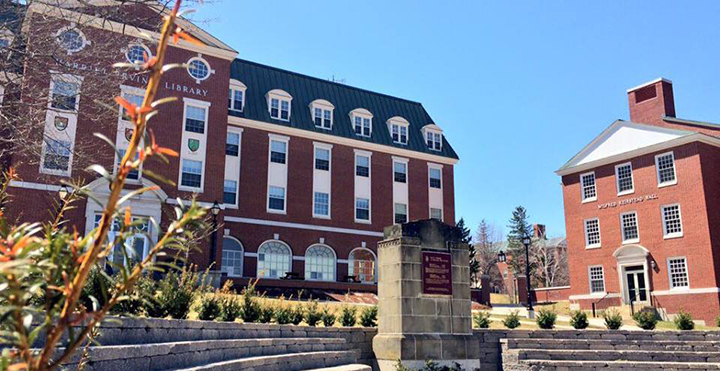
Introduction: Your Path to Free Education in Canada Starts Here
Imagine completing your Masters or PhD degree without worrying about tuition fees, accommodation costs, or living expenses. Sounds like a dream, right?
Well, for international students seeking world-class education in one of Canada’s most vibrant provinces, this dream is about to become reality.
The University of New Brunswick (UNB) Fully Funded Scholarship 2026 is opening doors for talented students from around the world, and I’m here to walk you through everything you need to know to make a winning application.
I’ve helped dozens of students navigate scholarship applications, and I can tell you with confidence: UNB’s comprehensive funding package is one of the most generous opportunities available to graduate students today. In this guide, I’ll share exactly what makes this scholarship special, who should apply, and the insider strategies that actually work.
What Is the University of New Brunswick Scholarship 2026?
Let me paint a clear picture of what you’re dealing with here.
The University of New Brunswick, located in the picturesque province of New Brunswick, Canada, is rolling out an ambitious fully funded scholarship program for 2026. This isn’t your typical partial funding—we’re talking complete financial coverage.
The Scholarship Covers:
✅ Full Tuition Fees – Every penny of your Masters or PhD program
✅ Living Stipend – Monthly allowance to cover accommodation, food, and personal expenses
✅ Study Materials – Books and required course materials
✅ Health Insurance – International student health coverage
Who Can Apply?
The beauty of this scholarship? It’s open to students from all countries worldwide. Yes, that means regardless of your nationality, if you have the academic credentials and research potential, you’re in the running.
Why Choose University of New Brunswick?
Before we dive into the application process, let’s talk about why UNB should be on your radar.
A University with Real Impact
UNB isn’t just any Canadian university;it’s a research-focused institution with a reputation for innovation and student success. Located in Fredericton and Saint John, New Brunswick offers a perfect balance:
- Lower Cost of Living – Compared to major Canadian cities like Toronto or Vancouver, New Brunswick is significantly more affordable
- Tight-Knit Community – Smaller graduate cohorts mean more personalized attention from supervisors
- Strong Industry Connections – Particularly in engineering, forestry, and business sectors
- Quality of Life – Canada consistently ranks among the best countries to live in the world
Research Opportunities
If you’re pursuing graduate studies, research is your lifeblood. UNB excels in several research areas:
- Engineering and applied sciences
- Environmental sciences and forestry
- Business and entrepreneurship
- Health sciences
- Maritime studies (given the coastal location)
The scholarship isn’t just about money, it’s an investment in your academic future at an institution that takes your research seriously.
Masters vs. PhD: Which Program Is Right for You?
One of the best things about this scholarship is that it covers both Masters and PhD programs. But which should you choose?
Masters Programs (Typically 2 Years)
Best for you if:
- You want to specialize in a specific field before entering the workforce
- You need a credential boost for career advancement
- You prefer a shorter commitment
- You’re transitioning to a completely new field
Popular UNB Masters Programs:
- MBA (Business Administration)
- MEng (Engineering specializations)
- MA/MSc (various research-based programs)
- MFS (Forestry Sciences)
PhD Programs (Typically 4-6 Years)
Best for you if:
- You’re passionate about original research
- You want to become an academic or lead researcher
- You’re willing to commit to deeper specialization
- You enjoy mentoring and teaching
Popular UNB PhD Programs:
- PhD in Engineering
- PhD in Environmental Sciences
- PhD in Business Administration
- PhD in Health Sciences
Pro Tip: If you’re unsure, reach out directly to UNB’s graduate admissions office. They can help you assess which program aligns with your career goals.
Eligibility Requirements: Do You Qualify?
Let’s be straightforward about what UNB is looking for.
Academic Requirements
- Bachelor’s Degree – A completed undergraduate degree (or equivalent) from a recognized institution
- Strong GPA – Typically 3.0 or higher on a 4.0 scale (though competitive candidates usually have 3.5+)
- For PhD Programs – A Masters degree is often preferred, though some programs accept strong Bachelor’s degree holders
English Language Proficiency
Since the instruction is in English, you’ll need to prove your language skills:
- TOEFL iBT – Score of 80 or higher
- IELTS – Band score of 6.5 or higher
- Cambridge English – Level C1 or higher
- Exemptions – If English is your native language or your undergraduate degree was taught in English
Other Requirements
- Valid passport with ability to obtain Canadian study permit
- Statement of purpose/research interests
- References from previous instructors or mentors
- Relevant work experience (especially beneficial for MBA programs)
What Makes Your Application Stand Out?
Here’s what admissions officers told me, off the record: They want to see alignment between your goals and UNB’s strengths.
If you’re applying for a Masters in Forestry, demonstrate how UNB’s environmental programs specifically match your career vision. If you’re pursuing a PhD in Engineering, highlight your research contributions and why UNB’s labs are the perfect fit.
Step-by-Step Application Guide: From Zero to Submission
I’m going to break down the application process so clearly that you’ll know exactly what to do at each stage.
Step 1: Choose Your Program (2-3 Days)
- Visit UNB’s graduate programs website
- Research 2-3 programs that match your interests
- Note application deadlines and program-specific requirements
- Email the program coordinator with questions
Step 2: Gather Your Documents (1-2 Weeks)
You’ll need:
✓ Transcripts from all post-secondary institutions
✓ Bachelor’s degree certificate
✓ English language test scores (TOEFL/IELTS)
✓ Valid passport copy
✓ Resume/CV
✓ Academic references (usually 2-3)
Insider tip: Request official transcripts NOW. Universities can take weeks, and you don’t want to miss deadlines because of paperwork delays.
Step 3: Write a Compelling Statement of Purpose (1-2 Weeks)
This is where you sell yourself. Your statement should answer:
- “Why do you want to study at UNB specifically?” (Not just general reasons—mention faculty, programs, research centers)
- “What are your research interests or career goals?”
- “How will this degree help you achieve those goals?”
- “What unique perspectives or experiences will you bring to our program?”
Word count: Usually 250-500 words. Make every word count.
Tone: Professional but personable. Show passion without being dramatic.
Step 4: Secure Strong References (1-2 Weeks)
Contact previous professors or workplace supervisors who know your academic work well. Give them:
- Deadline (2-3 weeks buffer)
- Specific information about the program
- Your statement of purpose (so they can write relevant letters)
- Details about scholarship opportunities (shows importance)
Step 5: Submit Your Application (1 Day)
- Create account on UNB’s online application portal
- Fill in all required information accurately
- Upload documents in specified formats
- Pay application fee (typically $75-100 CAD)
- Submit and keep confirmation email
Timeline: Most programs have rolling admissions, meaning the earlier you apply, the better your chances. Apply at least 2-3 months before stated deadlines.
Insider Secrets: How to Make Your Application Irresistible
Based on conversations with admissions officers, here’s what actually matters:
Secret 1: The “Why UNB?” Factor
Generic applications die in the inbox. Specific ones get read carefully.
Instead of: “UNB is a respected university with great programs”
Write: “Professor Dr. Jane Smith’s research in renewable forestry materials directly aligns with my thesis proposal. Her 2024 publication on bio-based composites addresses exactly the problem I want to solve in my thesis: sustainable alternatives to traditional materials in developing nations.”
See the difference? The second version shows you’ve done homework. It demonstrates genuine interest, not just scholarship desperation.
Secret 2: Quantifiable Impact Stories
Admissions committees want to invest in students who will make an impact. Show them you already have.
Examples:
- “Led a team of 5 engineers that designed a water purification system used by 2,000 residents in rural areas”
- “Published 3 peer-reviewed papers in my undergraduate research”
- “Increased organizational efficiency by 40% through process improvements I designed”
Numbers stick. They make your achievements real and measurable.
Secret 3: Address Gaps Proactively
If your GPA took a hit in second year, or you have an unexplained gap in your CV, address it briefly in your statement. Don’t make them guess.
Example: “While my GPA during my second year (3.1) doesn’t fully reflect my academic capability, the personal challenges I faced during that time have significantly strengthened my resilience and commitment to my studies. Since then, I’ve maintained a 3.7+ GPA and discovered a genuine passion for research.”
Secret 4: Show You’ve Researched UNB Specifically
- Mention 2-3 faculty members whose work interests you
- Reference specific research centers or facilities
- Show knowledge of New Brunswick and the region
- Demonstrate understanding of program-specific features
Scholarship Timeline and Deadlines
Here’s what you need to circle on your calendar:
Important Note: The official deadline is listed as “Not Specified” in most postings, which is actually common for rolling admissions programs.
Recommended Timeline for 2026 Intake:
- Now (June 2026): Research programs and gather documents
- July-August 2026: Complete applications for early consideration
- September 2026: Second wave of applications
- October 2026: Final applications (earlier deadlines often favor applicants)
- December 2026 – February 2027: Admissions decisions begin rolling out
- May-June 2027: Final decisions and enrollment confirmation
Pro Strategy: Apply in July-August for maximum consideration and competitive advantage.
FAQ: Questions We Get Asked All the Time
“Is the scholarship really free? Are there any hidden costs?”
Short answer: Yes, it’s genuinely fully funded. However, you’ll likely have personal expenses not covered (phone, entertainment, clothing). Budget an additional $3,000-5,000 CAD annually for these.
“Do I need work experience to apply?”
Not required, but it helps. For Masters programs, work experience is often preferred but not mandatory. For PhDs, research experience is more important than work experience.
“Can international students work in Canada while studying?”
Yes! Canadian study permits allow international students to work up to 20 hours per week during studies and full-time during breaks. Many graduate students work in their field, which helps fund the extras and builds experience.
“What’s the job market like in Canada after graduation?”
Excellent. Canada actively recruits international graduates. Most students have job offers before graduation, particularly in STEM fields. The average salary for Masters graduates in Canada ranges from $60,000-75,000 CAD annually.
“Is New Brunswick a good place to live?”
Absolutely, but it’s different from major cities. Expect a quieter, more affordable lifestyle. Great for students, less party-oriented than Toronto or Vancouver. The Atlantic coast is beautiful for outdoor activities.
“How long does admissions take?”
Typically 4-8 weeks from submission to decision. Some programs are faster; others take longer. You can follow up after 6 weeks if you haven’t heard.
“Can I defer my admission if accepted?”
Usually yes, but ask the program directly. Some programs allow one-year deferrals; others are more flexible. Better to clarify before accepting.
Beyond the Scholarship: What to Expect as a UNB Graduate Student
Let me paint the picture of what your life will actually look like.
Academic Life
You’ll be part of a research-focused community where:
- Close mentorship is standard (smaller cohorts)
- Seminar-style classes encourage deep discussion
- Your supervisor becomes a key mentor
- Teaching/research assistant positions are common and paid
Social and Community Life
New Brunswick offers:
- Tight-knit graduate student communities
- Regular departmental events and seminars
- Access to beautiful natural areas (hiking, kayaking, coastal exploration)
- More affordable housing means better living conditions on student stipends
- Strong international student support services
Career Outcomes
UNB graduates are employed at:
- Fortune 500 companies
- Government research institutes
- Academic institutions worldwide
- Startup companies founded by alumni
- Non-profit and NGO organizations
Common Mistakes That Sink Applications (And How to Avoid Them)
Mistake 1: Generic Applications
✗ “I want to study at UNB because it’s a good university with excellent programs.”
✓ “I want to study at UNB because the Department of Engineering’s focus on sustainable infrastructure aligns with my research agenda, and Professor David Johnson’s work on green building technology directly complements my thesis proposal.”
Mistake 2: Overlooking Program-Specific Requirements
Each program has different needs. Some want research proposals; others want professional goals. Read every requirement twice.
Mistake 3: Weak References
Submitting references from people who barely know you is worse than no reference. Choose people who know your work intimately and can speak specifically about your abilities.
Mistake 4: Poor English Writing
This matters more than you think. Get a native English speaker to review your statement of purpose. Typos and grammatical errors suggest carelessness.
Mistake 5: Applying Too Late
Rolling admissions means earlier applications get priority. Waiting until the last day is a strategic mistake.
Mistake 6: Not Following Instructions
If they ask for a 250-word statement, give them 250 words, not 500. If they want specific document formats, follow exactly. Attention to detail matters.
How to Prepare Yourself for Success (After Acceptance)
If you’re selected (which I hope you will be!), here’s how to hit the ground running:
Before Arrival
- Connect with your assigned supervisor via email
- Join the graduate student Facebook groups or Discord
- Research housing options in Fredericton or Saint John
- Arrange banking and healthcare
- Get familiar with Canada’s culture and expectations
During Your First Month
- Attend orientation programs (they’re more valuable than you think)
- Build relationships with cohort members
- Set up regular meetings with your supervisor
- Understand lab protocols and resources
- Join relevant academic societies in your field
Building Long-Term Success
- Publish your research (critical for future opportunities)
- Network actively with faculty and peers
- Take advantage of professional development workshops
- Consider conference presentations
- Balance research intensity with mental health
Final Thoughts: Why This Scholarship Could Change Your Life
Here’s the thing about fully funded scholarships like UNB’s offering: They remove barriers and create possibilities.
You won’t be stressed about how to pay for rent. You won’t be distracted by part-time work conflicts. You can fully commit to your research, your learning, and your growth.
But scholarships go to people who understand their value and communicate it clearly. They go to applicants who’ve done their homework, who can articulate why they’re applying to this specific program at this specific university, and who demonstrate the potential to contribute meaningfully to their field.
That could be you.
The opportunity is there. The funding is real. The only question is: Are you ready to take action?
Ready to Apply? Your Next Steps
- Visit UNB’s Graduate Programs Page – Explore programs that match your interests
- Email Program Coordinators – Ask questions and show genuine interest
- Start Gathering Documents – Transcripts, references, language test scores
- Write Your Statement – Make it specific, compelling, and authentic
- Submit Early – Don’t wait for the last minute
- Follow Up Professionally – Check in after 6-8 weeks if needed
Have questions about the application process or want to share your success story? Drop a comment below. I read every single one and love celebrating with accepted students.
The future is waiting. Let’s make it happen.
Related Reads You’ll Love:
- Complete Guide to Canadian University Scholarships for International Students
- How to Write a Statement of Purpose That Gets You Accepted
- Living in Canada as an International Student: Real Costs Breakdown
- Best Countries for Graduate Studies in 2026: A Comparative Analysis
Last Updated: June 2026
Disclaimer: This guide is based on publicly available information. Always verify current requirements directly with the University of New Brunswick’s official admissions office, as programs, deadlines, and requirements may change. The University of New Brunswick Scholarship program details should be confirmed on the official UNB website.