
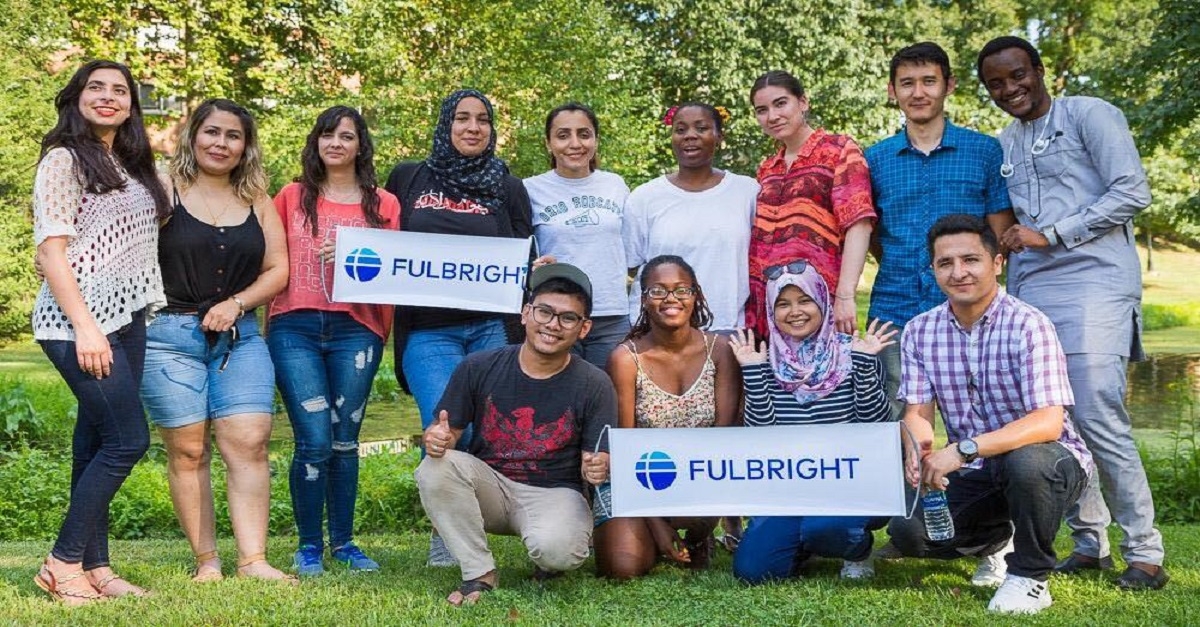
If you are an international student hoping to pursue a Master’s or PhD in the United States without worrying about tuition, flights, or health insurance costs, the Fulbright Foreign Student Program is definitely worth considering.
It is one of the world’s most well known scholarship programs and has been supporting international students since 1946.
In this guide, I’ll explain everything you need to know about the Fulbright program, including what the scholarship covers, who can apply, how the application process works, and where to find the official application portals.
Instead of spending hours searching through different websites for information, you’ll find the key details you need all in one place.
What Is the Fulbright Foreign Student Program
The Fulbright Foreign Student Program is the international arm of the Fulbright Program, funded by the US Department of State’s Bureau of Educational and Cultural Affairs. It brings graduate students, young professionals, and artists from more than 160 countries to study and conduct research at universities across the United States.

Roughly 4,000 students receive a Fulbright award every single year. That number alone tells you this is not a small niche grant. It is a global exchange initiative built to create mutual understanding between the United States and the rest of the world, and education just happens to be the vehicle.
Unlike a typical scholarship you apply for directly through a university, the Fulbright Foreign Student Program works through binational Fulbright Commissions or the nearest US Embassy in your home country. This detail matters a lot, and I will explain exactly why later in this article.
DON’T MISS:Documents Required for a Fully Funded Scholarship in Europe: The Complete 2026 Checklist
Fulbright Scholarship Overview at a Glance
| Category | Details |
|---|---|
| Host country | United States of America |
| Study level | Master’s degree and PhD (some countries also allow non degree research) |
| Funding type | Fully funded, need based and merit based |
| Eligible countries | 160 plus countries worldwide |
| Application route | Through your country’s Fulbright Commission or US Embassy |
| Typical deadline | Varies by country, usually between February and October |
| Grant duration | Up to two years for Master’s programs |
Because deadlines shift from country to country, the smartest move is to check your specific national Fulbright Commission page early. Some windows close as early as May, while others stretch into October, so waiting until the last minute could mean missing your country’s cycle entirely.
Fulbright Scholarship Benefits: What Actually Gets Covered
This is where the program truly stands out compared to most study abroad scholarships. A Fulbright award for foreign students typically includes:
- Full tuition and required academic fees at your host university
- A monthly living stipend to cover housing, food, and daily expenses
- Round trip airfare between your home country and the United States
- Accident and sickness health insurance coverage for the entire grant period
- Book and research allowance in many award categories
- Pre academic English training for candidates who need it, through the Fulbright Long Term English component
- Orientation and cultural enrichment activities once you arrive in the US
Some country specific awards also add a computer allowance, a settling in allowance, or support for a spouse or dependents, though this varies widely depending on where you are applying from. The bottom line is simple: a genuine Fulbright award is designed so that finances never become the reason you cannot finish your degree.
Who Is Eligible for the Fulbright Foreign Student Program
Eligibility criteria are set at a global level but fine tuned by each country’s Fulbright Commission, so always confirm details locally. That said, most applicants across the world need to meet these general requirements:
- Be a citizen of a country with an active Fulbright Foreign Student Program
- Hold a completed undergraduate degree by the time the grant begins
- Have strong academic records and demonstrated leadership potential
- Show a clear, well thought out plan for how the degree connects to your career or your home country’s development
- Meet the English language requirement, usually through IELTS or TOEFL, unless applying under a waiver or the LTE track
- Not currently reside in the United States or hold permanent US residency
- Have limited or no prior study experience in the United States, since preference typically goes to first time applicants
Applicants who previously received a Fulbright, Humphrey, or similar US government funded grant are generally not eligible to apply again, and no candidate may hold more than one Fulbright student grant.
Fields of Study You Can Apply For
One of the biggest reasons students love this scholarship is its flexibility. The Fulbright Foreign Student Program funds almost every academic discipline, including:
- Social sciences and humanities
- Business administration and public policy
- Engineering and applied sciences
- Environmental studies and sustainability
- Journalism, media, and communications
- Education, public health, and international relations
- Interdisciplinary and emerging fields
Some fields such as clinical medicine or fields requiring direct patient contact are often excluded, and MBA or Law programs may follow separate award rules, so it is worth reading your country’s award description carefully before you start drafting your statement of purpose.
Required Documents for Your Application
Every Fulbright Commission asks for slightly different paperwork, but across almost every country you will need to prepare:
- A completed online application through the official Fulbright portal
- Academic transcripts and degree certificates
- A study or research objective statement
- A personal statement describing your background and goals
- Three letters of recommendation, ideally from professors or supervisors who know your work well
- Proof of English proficiency test scores where required
- A copy of your passport or national identification
- Curriculum vitae or resume
Start gathering these documents months before your deadline. Recommendation letters especially take time, since your referees need enough notice to write something thoughtful rather than rushed.
English Language Requirements: IELTS, TOEFL, or Waiver
Most Fulbright awards ask for a minimum TOEFL or IELTS score, though the exact threshold depends on the country and the field of study. If your English proficiency is still developing, do not assume you are automatically disqualified.
The Fulbright Long Term English program exists specifically for strong candidates who need extra language preparation. Selected LTE fellows receive up to eight months of intensive English training before their academic program formally begins. This option is generally limited to Master’s degree seekers and excludes MBA, Law, and non degree applicants, but it is a genuine pathway for talented students whose test scores are not yet where they need to be.
How to Apply for the Fulbright Foreign Student Program Step by Step
- Find your country’s Fulbright Commission or nearest US Embassy page and read the local award description carefully.
- Confirm your eligibility and the specific documents required for your country.
- Create your account on the official Fulbright online application portal.
- Write and revise your study objective and personal statements. Give yourself several drafts and outside feedback before submitting.
- Request your recommendation letters early and give your referees a clear deadline.
- Take your IELTS or TOEFL exam if required, and send official scores directly to your Fulbright Commission.
- Submit your full application before your country’s local deadline, not the general international deadline, since the local one is almost always earlier.
- Prepare for a possible interview, as most Fulbright Commissions shortlist candidates for an in person or virtual interview round.
- Wait for notification. Shortlisted candidates are usually contacted within a few months, and final approval comes from the Fulbright Foreign Scholarship Board.
You can start your application directly through the official portal here: foreign.fulbrightonline.org
This is the official global site where you select your home country and get redirected to your specific national application system and deadline.
Application Deadline: Why Your Country’s Date Is What Matters
There is no single worldwide Fulbright deadline. This trips up more applicants than almost anything else in the process. Every Fulbright Commission and US Embassy sets its own local deadline, and these dates range broadly from as early as May through October, depending entirely on the country.
Two deadlines exist for most applicants: the local Commission deadline and the internal portal deadline. Treat the local one as the real deadline, since applications are almost always reviewed and shortlisted at the country level first before anything moves forward internationally.
Search “Fulbright [your country name]” or visit the official portal linked above, select your nation from the dropdown, and write that exact date somewhere you will actually see it.
Selection Process: What Happens After You Apply
Once your application closes in your home country, a local selection committee, usually made up of Embassy representatives, academics, and Fulbright alumni, reviews every submission. Strong candidates are invited for an interview conducted in English.
Shortlisted files then move to the Fulbright Foreign Scholarship Board in Washington for final approval. This entire cycle, from application deadline to final decision, commonly takes anywhere from four to eight months, so patience really is part of the process.
Why You Should Apply for This Scholarship
Beyond the financial coverage, a Fulbright grant opens doors that last well beyond graduation. You join a global alumni network that includes Nobel laureates, heads of state, artists, scientists, and business leaders from every corner of the world. You gain firsthand exposure to American academic culture, build a professional network across two countries, and return home with a credential that carries serious international weight.
If you care about your field, your community, and your long term career, this is one of the very few scholarships that genuinely removes cost as a barrier while adding real prestige to your resume.
Frequently Asked Questions About the Fulbright Foreign Student Program
Is the Fulbright Foreign Student Program really fully funded? Yes. It covers tuition, a living stipend, airfare, and health insurance for the full grant period, which typically runs up to two years for a Master’s degree.
Can I apply if I already have a Master’s degree and want a PhD? In many countries yes, though PhD availability and specific rules vary by nation, so check your local award description.
Do I apply directly to a US university? No. You apply through your home country’s Fulbright Commission or nearest US Embassy first. University placement typically happens later in the process, either through IIE placement services or self placement, depending on your country’s model.
What if my English test score is below the requirement? You may still be considered for the Fulbright Long Term English program, which provides months of English training before your academic program starts.
How many people actually receive this scholarship each year? Around 4,000 students worldwide receive Fulbright Foreign Student awards annually across more than 160 countries.
Where do I start my application? Visit the official portal at foreign.fulbrightonline.org, choose your country, and follow the instructions provided by your local Fulbright Commission or US Embassy.
Conclusion
The Fulbright Foreign Student Program is much more than just another scholarship. It can help cover your education, travel, health insurance, and living expenses while giving you the chance to study in the United States and connect with a strong global academic community.
If you are interested in applying, check the deadline for your country and start preparing your documents as early as possible. Give yourself enough time to write a strong application and review everything carefully.
Great opportunities like this are highly competitive, so starting early can make a big difference. Don’t wait until the deadline is only a few days away.