
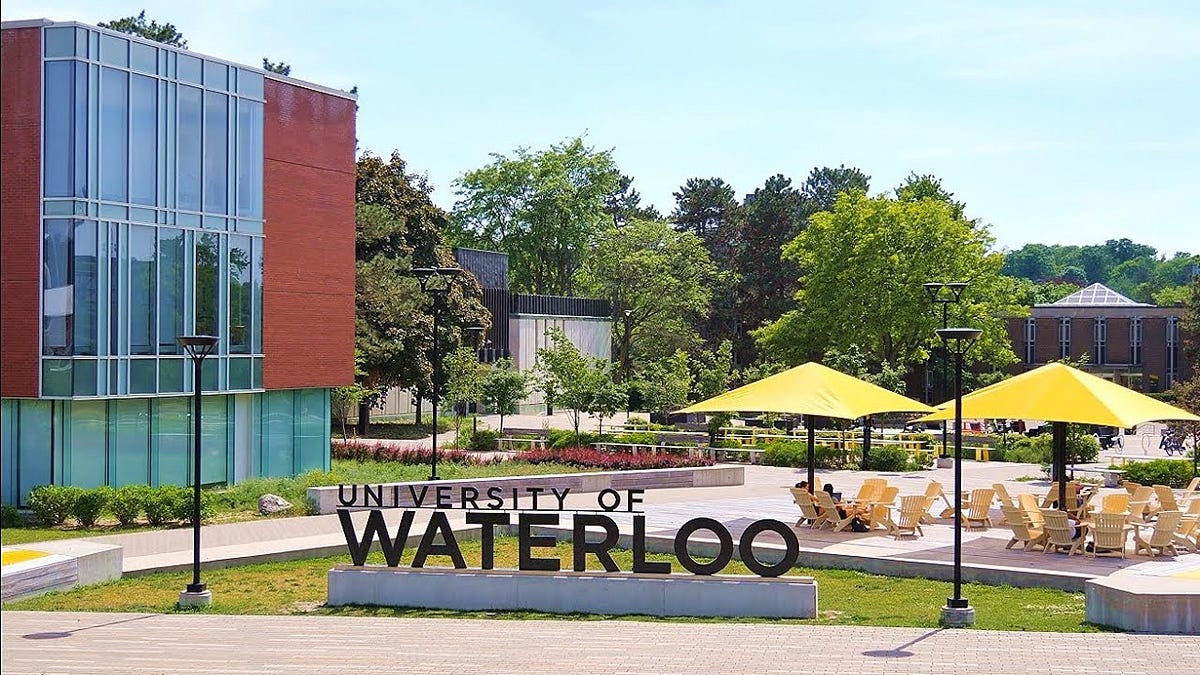
Are you dreaming of studying in Canada without closing your bank account? The University of Waterloo Scholarships 2026 might be exactly all you need. I have spent 15 years helping students win international scholarships. And I can tell you this. Waterloo is not just another Canadian university offering pocket change. It genuinely backs its international students with real funding, real research opportunities, and a globally respected degree.
In this guide, I will break down everything about the University of Waterloo Scholarships 2026. You will learn what they actually pay. You will also learn how to apply the smart way. So let us get into it.
ABOUT WATERLOO
The University of Waterloo sits in Ontario, Canada. It was established in 1957. Since then, it has grown into one of the top research universities in North America.
Waterloo is famous for its innovation culture. It also runs the largest co-op education program in the world. For 2026 applicants, this matters a lot.
International graduate students can access guaranteed funding packages. They can also apply for merit based awards and research assistantships. Together, these can cover both tuition and living costs for the full length of a program.
Here is the part most blogs skip. Waterloo’s graduate funding is not a lottery. Once you get admitted into a research based Master’s or PhD program, funding comes built into your offer. That is a big deal, and I want you to understand it clearly.
Scholarship Overview
The University of Waterloo Scholarships for 2026 target graduate students. They cover Master’s and PhD programs across six faculties. These are Arts, Engineering, Environment, Health, Mathematics, and Science.
Funding comes from several sources. These include university administered awards, faculty specific scholarships, and assistantships. It also includes external programs like the Canada Graduate Research Scholarship.
For PhD students, Waterloo guarantees a minimum funding package. So no doctoral candidate has to worry about tuition or rent alone. For Master’s students, the flagship award is the International Master’s Award of Excellence. This award gets considered automatically. You do not need extra paperwork for it.
This is what sets Waterloo apart. Many “fully funded” scholarships online come with vague eligibility rules. Some have unclear deadlines. Others cap funding so low it barely covers groceries for a semester. Waterloo is different.
Scholarship Summary Table
| Detail | Information |
|---|---|
| Host Country | Canada |
| University | University of Waterloo |
| Study Level | Master’s and PhD |
| Funding Type | Fully Funded (Tuition plus Living Stipend) |
| Eligible Countries | All countries |
| Deadline | Varies by faculty and program |
Host Country
Canada remains one of the most welcoming countries for international students. Ontario, in particular, hosts some of Canada’s strongest research institutions.
Waterloo sits inside Canada’s own tech hub. As a result, graduate students get direct access to tech companies, startups, and research labs beyond the classroom.
Study Level
This funding applies to Master’s programs and PhD programs. Both thesis based and major research paper tracks qualify. All six faculties are included.
Undergraduate applicants can also access separate entrance awards. However, the biggest fully funded packages go to graduate researchers.
Funding Type
Waterloo’s graduate funding is not one flat scholarship. Instead, it combines several funding streams:
- Tuition support
- A monthly living stipend through Research or Teaching Assistantships
- Merit based top up awards, such as the IMAE for Master’s students
- Guaranteed minimum annual funding for PhD candidates
Together, these funding streams make this a genuinely fully funded opportunity. It is not a partial tuition waiver dressed up as one.
Eligible Countries
There are no nationality restrictions here. Students from any country can apply. This includes Nigeria, India, Pakistan, Kenya, Bangladesh, the Philippines, and beyond.
All you need is to meet the academic and admission requirements.
Deadline
Undergraduate admissions follow one fixed date. Graduate deadlines work differently. They vary by department and research area.
Some programs close applications in December for a September intake. Others stay open until February. So always check the specific program page. Do not assume you have more time than you actually do.
Scholarship Benefits
Successful applicants can expect the following:
- Full tuition coverage through assistantships and award packages
- Monthly living stipends between CAD 1,733 and CAD 2,062, depending on assistantship type
- The International Master’s Award of Excellence, worth CAD 2,500 per term for up to five terms (total CAD 12,500)
- A guaranteed minimum PhD funding package of over CAD 28,000 per year, for up to four years
- Access to the co-op program, which lets students earn extra income during paid work terms
- The chance to work with leading researchers in engineering, computer science, mathematics, and health sciences
- A degree from a university consistently ranked among Canada’s top research institutions
Eligibility Criteria
To qualify, applicants generally need to meet these requirements:
- Hold an undergraduate degree for Master’s applicants, or a Master’s degree for PhD applicants, from a recognized institution
- Show strong academic performance, typically first class or upper second class standing
- Apply to, or already hold admission into, a research based graduate program at Waterloo
- Meet the English language requirement if your previous education was not in English
- Submit a complete application, including transcripts, references, and a statement of research interest
Here is something worth repeating. Many awards, including the IMAE, get considered automatically. Your regular admission application doubles as your scholarship application. There is no separate form for many of these funding streams.
Available Courses and Fields of Study
Waterloo’s graduate funding covers nearly every discipline at the university. This includes:
- Computer Science and Data Science
- Engineering, including Mechanical, Electrical, Civil, Software, and Chemical
- Mathematics and Statistics
- Environmental Science and Sustainability
- Health Sciences and Kinesiology
- Arts, Social Sciences, and Humanities
- Architecture and Planning
If your research area exists at Waterloo, there is likely a funding path attached to it.
Required Documents
Before you apply, gather these documents:
- Academic transcripts from all schools you attended
- A valid passport copy
- A statement of purpose or research proposal
- Two to three academic reference letters
- Proof of English language proficiency, unless you qualify for a waiver
- A CV or resume showing research experience or relevant work
- An Educational Credential Assessment, if your degree needs one
English Language Requirements
Waterloo asks for proof of English proficiency if your prior education was not taught in English. Accepted tests usually include:
- IELTS Academic, with an overall band of 6.5 or higher, and no band below 6.0
- TOEFL iBT, generally around 90 or higher
- Duolingo English Test, PTE Academic, or Cambridge English, depending on the program
Some applicants qualify for a waiver. This applies if you completed a prior degree taught entirely in English. Even so, always confirm the exact requirement with your department, since thresholds can shift slightly between faculties.
YOU MAY ALSO CHECK OUT:Bridgewater State University Scholarship 2026: Fully Funded Guide
How to Apply Step by Step
Follow these steps to apply for the University of Waterloo Scholarships 2026:
- Research your program. Visit the Waterloo Graduate Studies website. Then find the Master’s or PhD program that fits your background and interests.
- Check your deadline. Every program sets its own timeline. So confirm this early.
- Prepare your documents. Gather transcripts, references, your statement of purpose, and test scores in advance.
- Submit your application. Use Waterloo’s graduate admissions portal to upload everything.
- Wait for automatic scholarship review. Awards like the IMAE and IDSA need no separate application.
- Respond to your offer quickly. Review your funding package, then confirm your acceptance before the deadline.
Application Deadline
Deadlines vary across faculties and programs, so there is no single date for everyone. As a general rule, most September intake programs close applications between December and February. Still, always confirm the exact deadline on the official program page for your chosen field.
Selection Process
Waterloo handles selection at the department and faculty level, not through one central committee. Once you submit your application, the faculty reviews your academic record, research fit, and references. Strong candidates then get nominated for funding based on that faculty’s award allocation.
Here is a tip. A sharp, focused statement of purpose can boost your chances. Try to align it clearly with a professor’s research area.
Why You Should Apply
Beyond the money, Waterloo offers something harder to measure but just as valuable. That is proximity to opportunity. Thanks to the co-op program and the university’s location in Canada’s tech corridor, graduate students often work on real projects while completing their research.
Add Canada’s post graduation work permit pathway to the mix. Suddenly, a Waterloo degree becomes a real springboard into a global career, not just a certificate on a wall.
For students priced out of studying abroad, this fully funded pathway closes that gap.
Frequently Asked Questions
Is the University of Waterloo Scholarship really fully funded for international students? Yes. When combined, tuition support, assistantship stipends, and merit based awards typically cover both tuition and living costs for eligible Master’s and PhD students.
Do I need to submit a separate scholarship application? Usually not. Most major graduate awards, including the IMAE and IDSA, get considered automatically. However, some faculty specific awards may need extra forms, so check your program page.
Can students from any country apply? Yes. These opportunities are open to international students from every country, as long as they meet the academic and language requirements.
What is the average monthly stipend? Graduate assistantship stipends generally range between CAD 1,733 and CAD 2,062 per month, depending on the assistantship type.
Is work experience required to apply? No, it is not mandatory. Still, relevant research experience, publications, or a strong academic record can strengthen your application significantly.
Apply Now
Ready to take the next step? Visit the official University of Waterloo Graduate Studies portal to explore programs and start your application today.
Official Graduate Admissions Portal: https://uwaterloo.ca/future-graduate-students/
International Student Funding Information: https://uwaterloo.ca/current-graduate-students/awards-and-funding/international-student-funding
International Master’s Award of Excellence Details: https://uwaterloo.ca/current-graduate-students/catalogs/graduate-funding-and-awards-database/international-masters-award-excellence-imae
Take your time to review each department’s deadline before applying. Do not wait until the last week to gather your documents. Scholarship seasons move fast. And the strongest applications always come from students who prepare early.